
In Brief: Difference Between Level 1 and Level 2 Dental Assistants
The main difference between Level I and Level II dental assistants in Ontario is that Level II assistants can perform specified intra-oral procedures under a dentist’s direction. Level I assistants focus primarily on chairside and extra-oral duties. In Ontario, dentists may assign Level II duties to dental assistants who hold the NDAEB certificate, subject to limited historical exceptions. Dental radiography is a separate issue: HARP requirements apply, and taking radiographs should not be described as a Level II-only skill.
If you’re considering dental assisting in Ontario, “Level I” and “Level II” describe an important difference in what you may be trained and qualified to do.
A level 1 dental assistant primarily supports the dentist chairside and performs extra-oral clinical duties. A level 2 dental assistant, also called an intraoral dental assistant, can additionally perform specified procedures inside a patient’s mouth when directed by a dentist.
That distinction can help prospective students choose training that matches the role they hope to pursue.
What Is the Difference Between a Level I and Level II Dental Assistant in Ontario?
| Level I | Level II | |
| Primary focus | Chairside and extra-oral assisting | Chairside plus approved intra-oral duties |
| Examples | Preparing treatment areas, sterilization, passing instruments, mixing materials, charting as directed | Coronal polishing, fluoride, impressions, rubber dam, sealants and other permitted procedures |
| NDAEB certificate for Level II duties | No | Yes |
| Radiography | Possible when HARP requirements are met | Possible when HARP requirements are met |
The Ontario Dental Assistants Association (ODAA) lists chairside responsibilities such as instrument sterilization, treatment-area preparation, high-volume evacuation, restorative-material preparation, and assisting the dentist or hygienist among Level I skills.
What Changes at Level II?
Which duties can a Level II dental assistant perform? Level II expands the assistant’s clinical responsibilities.
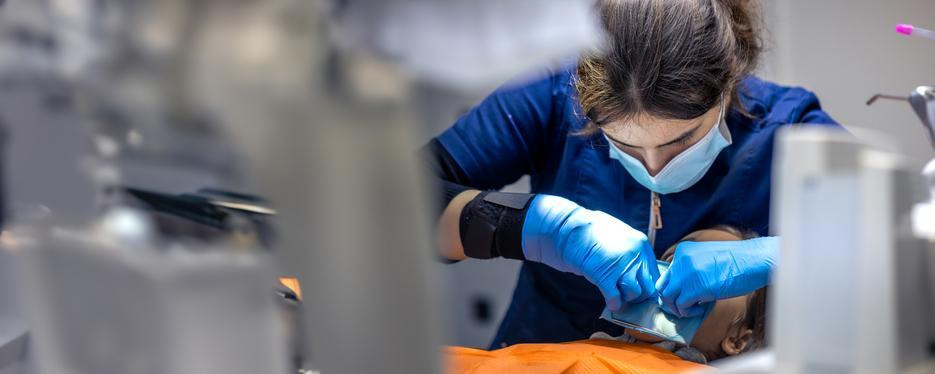
Under current Ontario guidance, a dentist may direct a qualified Level II assistant to perform procedures including applying and removing rubber dam, coronal polishing, taking certain impressions, providing oral-hygiene instruction, applying fluoride and pit-and-fissure sealants, using topical anesthetic, and placing or removing matrix bands and wedges.
Supervision is not identical for every procedure. For some intra-oral duties, the dentist must be present in the office suite and confirm that the procedure was performed safely and competently before the patient leaves. Other specified duties may be performed without the dentist present in the office, when directed appropriately.
Students interested in this broader clinical scope can explore CADH’s Intra-Oral Dental Assistant (Level I & II) Diploma Program.
Education and Certification Are Not the Same Thing
Completing a dental assisting program provides education and training, but program graduation should not be confused with professional certification..
The NDAEB explains that the RCDSO requires Ontario dentists to assign Level II intra-oral duties to dental assistants who hold the NDAEB certificate, apart from limited historical exceptions. The ODAA also serves as Ontario’s membership and certifying body for dental assistants.
Students should therefore understand the full pathway before enrolling. CADH’s Dental Assisting Admission Requirements explain entry requirements, while our guide on How to Become a Dental Assistant provides additional career context.
Where Does Dental Radiography Fit?
Radiography is where Level I versus Level II explanations can become misleading.
The ODAA includes exposing, processing, and mounting radiographs as a Level I skill when performed as specified by Ontario’s Healing Arts Radiation Protection Act (HARP).
The NDAEB likewise makes clear that receiving an NDAEB certificate does not itself provide HARP authorization. HARP is a separate Ontario requirement.
In other words, taking dental radiographs should not be treated as a defining Level II-only duty.

Choosing Training for the Role You Want
For students comparing programs, the difference between level 1 and level 2 dental assistant training comes down largely to clinical scope.
Level I provides the chairside foundation. Level II training adds preparation for specified intra-oral procedures and supports the pathway toward NDAEB certification for Level II practice in Ontario.
CADH’s 42-week Intra-Oral Dental Assistant Diploma Program combines Level I and Level II preparation for students interested in developing both chairside and intra-oral skills.
Would you like to get started?
Explore CADH’s Intra-Oral Dental Assistant Diploma Program and speak with admissions about current NDAEB and HARP requirements.
Key Takeaways
- Level I focuses primarily on chairside and extra-oral assisting.
- Level II adds specified intra-oral procedures performed under a dentist’s direction.
- Level II duties in Ontario are assigned to dental assistants who hold the NDAEB certificate, subject to limited historical exceptions.
- Program completion and professional certification are separate steps.
- Some Level II procedures require the dentist to remain in the office suite; others may be performed without the dentist present when appropriately directed.
- HARP radiography requirements are separate from NDAEB certification.
FAQ
What is the difference between a Level I and Level II dental assistant in Ontario?
Level I assistants primarily perform chairside and extra-oral duties. Qualified Level II assistants can additionally perform specified intra-oral procedures under a dentist’s direction.
What does “intra-oral dental assistant” mean?
An intra-oral dental assistant is a Level II assistant qualified to perform specified procedures inside a patient’s mouth when directed by a dentist.
Which duties can a Level II dental assistant perform?
Permitted duties include procedures such as coronal polishing, fluoride application, certain impressions, rubber dam placement and removal, sealants, topical anesthetic, and matrix bands and wedges. Specific supervision requirements vary by procedure.
Is an NDAEB certificate required for Level II duties in Ontario?
Yes. The RCDSO requires Ontario dentists to assign Level II duties to dental assistants who hold the NDAEB certificate, subject to limited historical exceptions.
Can Level I dental assistants take dental radiographs in Ontario?
Yes, when applicable HARP requirements are satisfied. The ODAA includes radiography among Level I skills, and the NDAEB confirms that HARP authorization is separate from the NDAEB certificate.